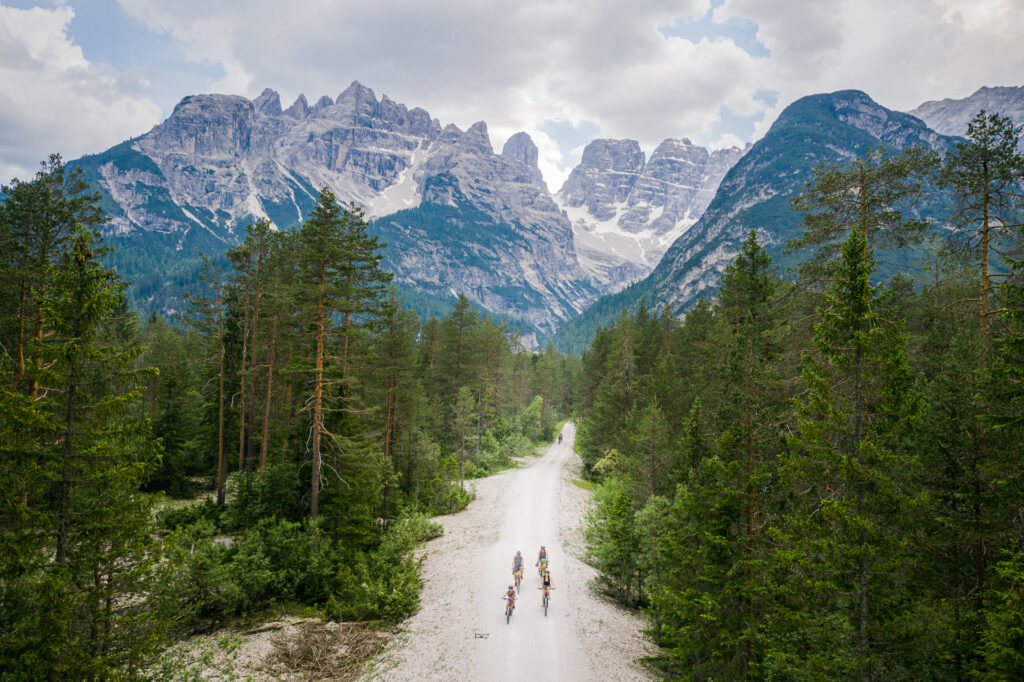
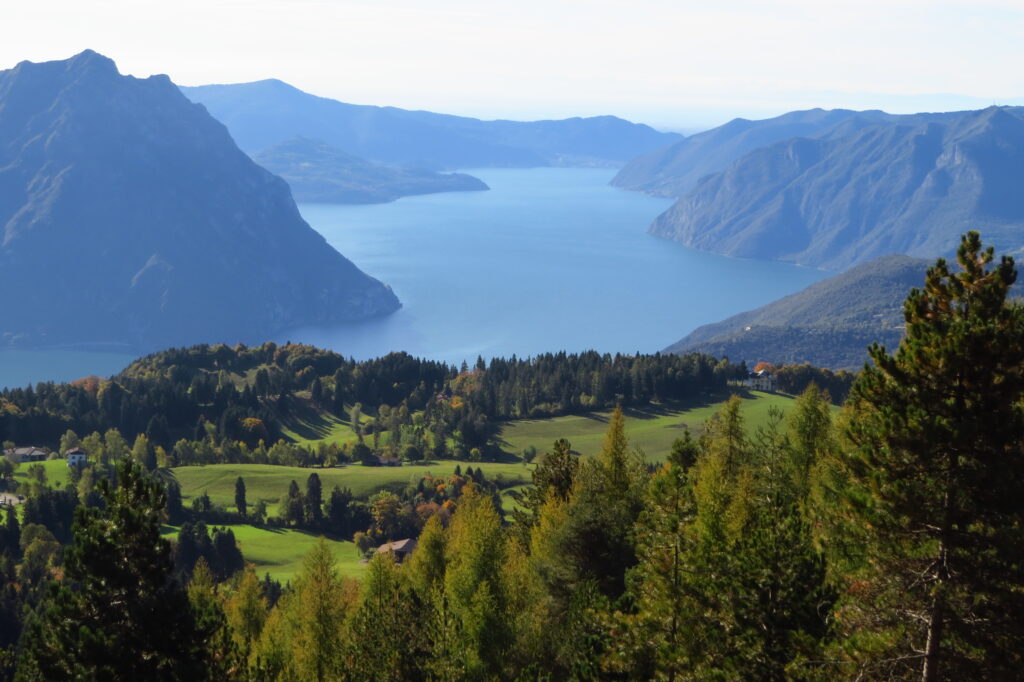
Since 2015, the Munich–Venice cycle route has been operational and well marked in Germany, Austria and Tyrol.
Agreement to connect the lakes and look towards Milan
On 28 October 2017, a Memorandum of Understanding was signed between various communities and parks in the provinces of Bolzano, Trento and Brescia. The objective? To connect Lake Caldaro to Lake Iseo, thus providing a western outlet towards Milan for the entire Alpine-Rhaetian cycle path system: for the first time, there was talk of a connection between Munich and Milan, linking a western branch to the Munich-Venice route.
The Oglio Cycle Route
A similar project had been carried out previously: in 2013, another protocol was signed between Valle Camonica, Laghi Bergamaschi, Sebino Bresciano and the two Oglio Parks, which led to the creation of the Oglio River Cycle Route, from Passo del Tonale to the River Po. The cycle route was completed in 2018 and won first prize in the Italian Green Road Awards 2019.
From Lake Iseo to Milan: the project gets underway
In 2018, in Lovere, the Circolo Culturale della Valle Cavallina put forward a proposal to extend the cycle route from Lake Iseo to Milan. In 2022, the Province of Bergamo drew up plans for the entire Bergamo section: a total investment of around 30 million euros. Some sections have already been completed (Vermiglio, Costa Volpino, Lovere and Lake Gaiano), whilst others are currently under construction (Lake Endine and Borgo di Terzo).
What's there - What's not there
Monaco-Bressanone
From Munich to Bressanone, the cycle route is, except for a few short sections, complete and passable and corresponds to the Munich-Venice route inaugurated in 2015 and managed by a coordination between the regions crossed (Germany, Austria and Italy).
The landscape
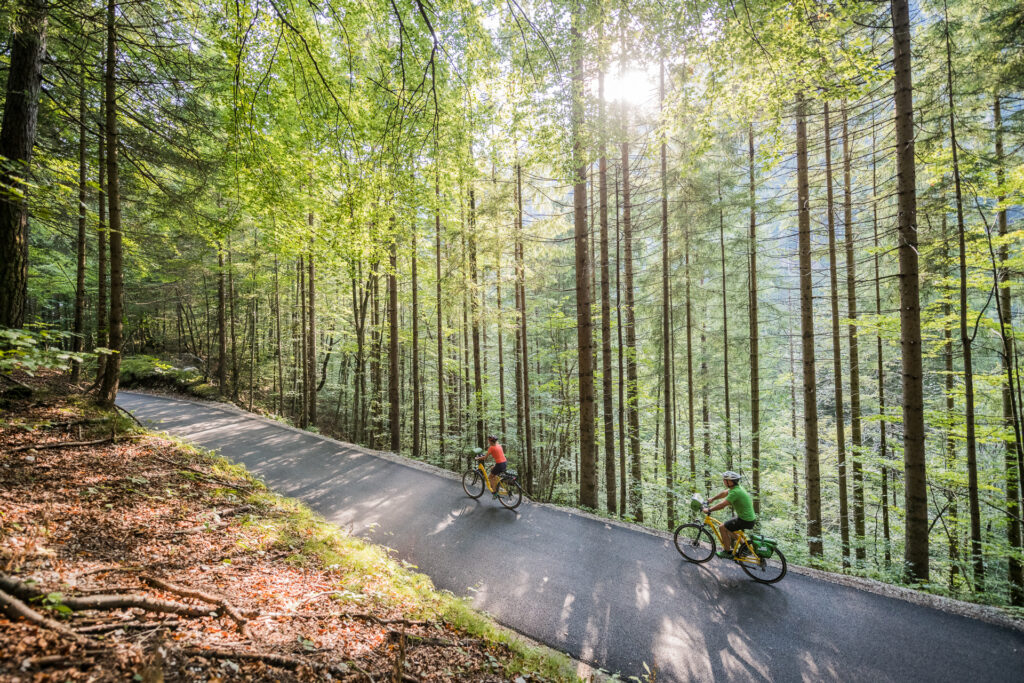
The cycle route winds its way through alpine landscapes, lakes and forests for about 350 km, passing through places and cultures of great charm and historical and scenic interest.
From Bressano to Lake Caldaro, the cycle paths of South Tyrol allow you to cross practically the entire valley floor, including the city of Bolzano.
The landscape
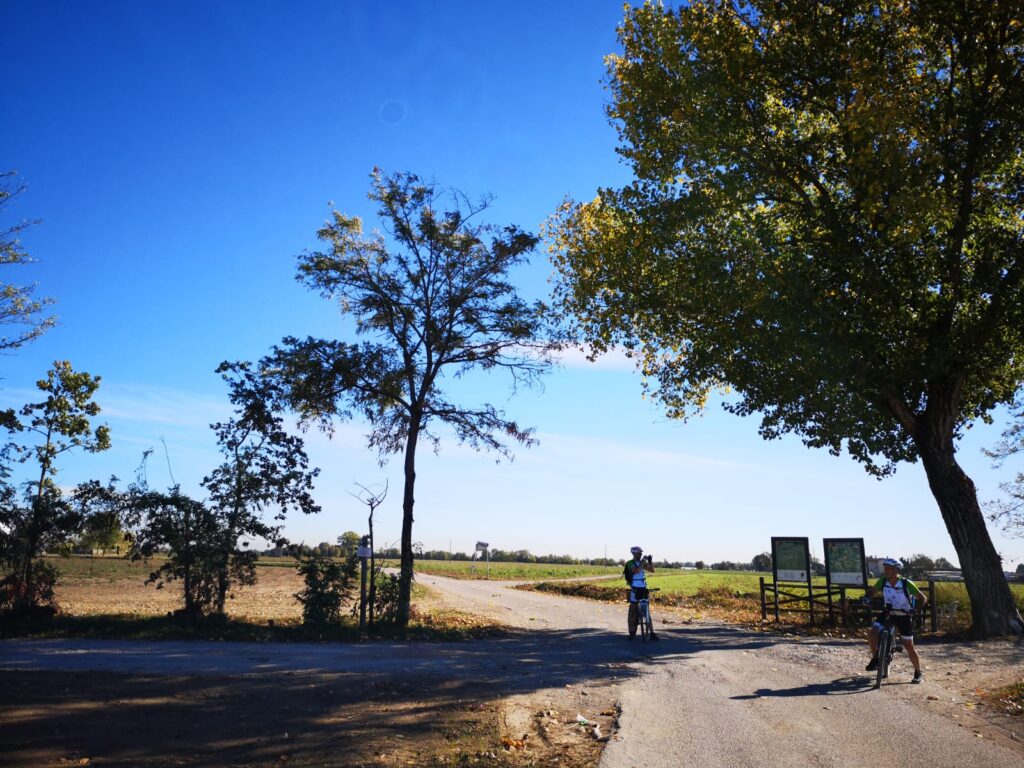
The landscape is typical of Tyrol, with vineyards and apple orchards, neat and visually striking farmsteads on the hillsides, small villages and towns rich in history and culture, and excellent food and wine.
This is the stretch of the great Alpine passes of Mendola and Tonale. From Lake Caldaro, once you reach Sant’Antonio, we recommend climbing up to the Mendola Pass using the rack railway (Kalterer Hohenweg), which transports bicycles. From the Mendola Pass, descend into the upper Val di Non via the cycle path. Then take the cycle paths of the upper Val di Non (we recommend following the path on the right bank). There is a section without cycle paths between the upper Val di Non and the lower Val di Sole. We recommend following the SS42 until you reach the Mostizzolo bridge. From here, take the Val di Sole cycle path towards Passo del Tonale. From Passo del Tonale, take the Valle Camonica cycle path until you reach Lake Iseo in Lovere.
The landscape
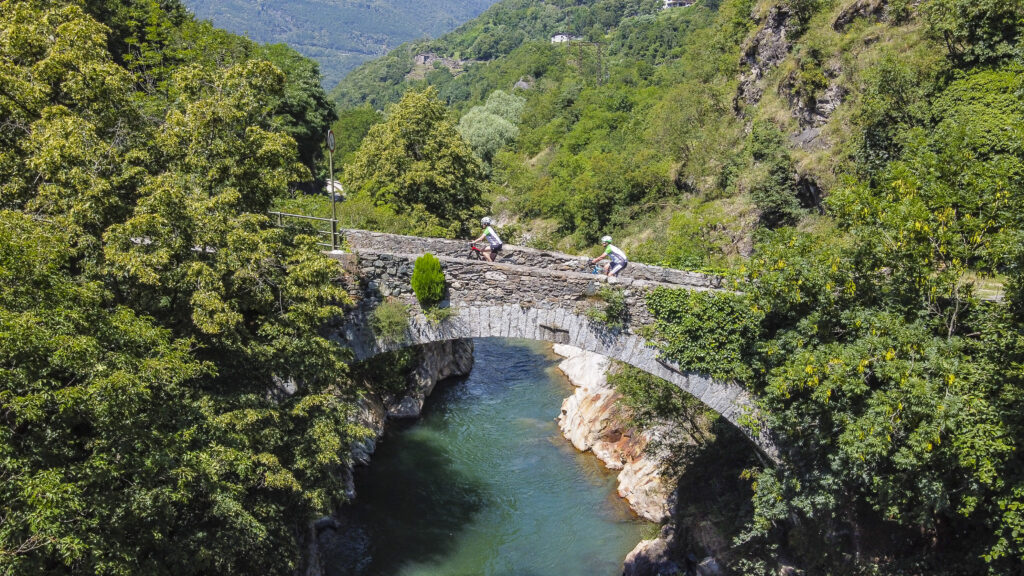
The landscape of the first section crosses the woods and cultivated fields of the Val di Non, characterised above all by vineyards and apple orchards that offer spectacular blooms in spring. Lake Santa Giustina and a series of castles dot the route. After crossing the Val di Sole, you reach the Tonale Pass: here, the balcony of the Adamello glacier system with its snow-capped peaks welcomes cyclists and accompanies them for a long stretch towards the heart of the Camonica Valley. The Camuna cycle path follows the River Oglio to Lake Iseo, crossing the entire Biosphere Reserve (MaB – UNESCO) and passing numerous archaeological sites, castles, villas and natural parks along the way.
Lago d'Iseo - Milano
From Lovere, the cycle path enters the Cavallina Valley, crossing the lakes of Gaiano and Endine. The route of the various existing cycle paths is not well marked, so we recommend following this track. Once you reach Trescore Balneario, continue along the Cavallina Valley cycle path. There is no cycle path between Trescore Balneario and Fara Gera d’Adda. There are sections such as the cycle paths in the Serio Park and sections in some municipalities, but they are not connected to each other. However, you can use this route to cover the entire route from Endine Gaiano to Milan. Once you reach Fara Gera d’Adda, a cycle/pedestrian bridge crosses the River Adda and, on the left bank of the river, the Naviglio Martesana cycle path begins, leading to the centre of Milan.
The landscape
The landscape of the first section of the route is characterised by the hills around Lake Gaiano and Lake Endine and the small rural villages that surround them. Towers and castles dot the landscape as far as the entrance to the Po Valley. From Trescore Balneario onwards, the route crosses a stretch of conurbation on the Milan-Brescia route, mitigated by a number of local parks, in particular the Serio and Adda parks, which protect the two rivers and are criss-crossed by numerous cycle paths. Finally, the Naviglio Martesana, a large hydraulic work dating back to the 16th century, connected the city with northern Europe through navigation along rivers and lakes. Today, the towpath of the ancient canal, transformed into a cycle path, is an attraction rich in history. In its final stretch, the canal enters the city of Milan, which is well served by a system of cycle paths that allow you to reach the heart of the metropolis.
An act of love for the local area and for those who dream of a sustainable future: this project is pedalling towards a world where mobility means freedom, culture and respect.